Showing posts with label Stanley Kubrick. Show all posts

12 January 2017

The Shining, 1980

Fig. 1 Poster

Stanley Kubrick's 'The Shining' (1980) is a horror film with themes of madness and isolation. It follows the story of the Torrance family as they travel to the Overlook Hotel, when Jack takes a position as winter caretaker. Jack, Wendy, and their son Danny are to spend the winter alone, as the hotel becomes inaccessible in the colder months. Fig. 2 shows the family on their way to the hotel, there is tension in the scene and the characters all seem annoyed with one another. Roger Ebert comments that 'There is no sense that the three function together as a loving family' (Ebert, 2006) and this produces a quiet tension right from the start of the film, as the audience wonders how the family will cope with their isolation.

Fig. 2 The Family

The family have a literal physical isolation to contend with, which could be difficult enough, but the nature of the place they find themselves in adds to their difficulties. The set is made up of large spaces, high ceilings and a repetitive and confusing layout. Ryan Lambie comments that 'The set generates tension not through claustrophobia and dark spaces, but with high ceilings and lonely expanses' (Lambie, 2016). The characters are lost in this space and, rather than creating an open feeling, the high ceilings seem to sit heavily above them, showing them to be small and alone. Fig. 3 shows Jack sat in the lounge, completely dwarfed by the size of the room; big chairs, tables, and light fixtures add to this effect. Kubrick’s heavy use of one point perspective also helps to create this feeling, as long hallways seem to press in on all sides.

Fig. 3 Jack in the lounge

Kubrick’s use of the recently invented Steadicam allowed for smooth and sweeping shots and Eric Henderson of Slant Magazine describes the cinematography as 'gliding, prowling' (Henderson, 2007). This is particularly effective in a scene with the camera closely following Danny as he explores the long hallways on his trike; there is a sense of being followed, and the smoothness of the movement lends to a supernatural feeling. Lambie describes the interior of the hotel as feeling ‘palpably evil' (Lambie, 2016). The audience gets to see the scene from Danny’s point of view and he is positioned very low to the ground, even for a child, making the ceilings seem incredibly far away, as though he has found himself in another world. When Danny encounters two other children, his lowered perspective makes them seem strangely tall and out of place (as seen in Fig. 4). Even if the hotel wasn’t supposed to be empty and the audience had not already learned of two children murdered there a previous winter, they would likely seem like they did not belong there. 

Fig. 4 Danny on his trike

Confusion and a lack of explanation are important elements in the building terror of the film. There are many plot elements that build mystery into the film, such as unanswered questions about the mental or supernatural nature of the strange goings on at the hotel, but the set also works to create a sense of uncertainty. The hotel is never fully explored, and the long corridors, described by Tim Robey as ‘hypnotically patterned’ (Robey 2012), could hide any number of horrors, real or imagined. Patterns can also be found on the carpets and they work to distort how the space is perceived by the audience. Sound is another tool used to create unease and uncertainty. Kubrick uses the work of several composers to create a score described by Janet Maslin as ‘stunningly effective’ (Maslin, 1980). Loud music and strange sounds build tension, only for nothing to happen, disquieting the audience and making it more frightening when something does happen, even if that something is only text appearing on screen.


Bibliography

Ebert, R (2006) Great Movie The Shining. At: http://www.rogerebert.com/reviews/great-movie-the-shining-1980 (accessed 12.01.17)

Henderson, E (2007) The Shining. At: http://www.slantmagazine.com/film/review/the-shining (accessed 12.01.17)

Lambie, R (2016) Iconic Set Design: The Shining's Overlook. At: http://www.denofgeek.com/movies/18283/iconic-set-design-the-shinings-overlook-hotel (accessed 12.01.17)

Robey, T (2012) Still shining darkly after all these years. At: http://www.telegraph.co.uk/culture/film/classic-movies/9637505/Still-shining-darkly-after-all-these-years.html (accessed 12.01.17)

Maslin, J (1980) Movie Review The Shining. At: http://www.nytimes.com/movie/review?res=EE05E7DF1738E270BC4B51DFB366838B699EDE (accessed 12.01.17)

Illustration List

Fig. 1 Poster
Kubrick, S (1980) The Shining. [Poster] At: http://thefoxisblack.com/blogimages//saul-bass-the-shining-film-poster-1.jpg (accessed 12.01.17)

Fig. 2 The Family
Kubrick, S (1980) The Shining. [Film Still] At: https://blogger.googleusercontent.com/img/b/R29vZ2xl/AVvXsEiP7Sr9DF6LNa4gGAJoP48R7j49x2a0vbi0cdOZPvJUzfn8Inv1hWIGFiBXvaQOq_VfKUaWERUVY0VwFoGtk8gWCKWQ1R8W17N0aJl6FaDR7qUK9gb7wDQpwf2_-D2Nf8KJZ24WU14B-6g/s1600/(1980)+The+Shining+Screenshot+7.png (accessed 12.01.17)

Fig. 3 Jack in the lounge
Kubrick, S (1980) The Shining. [Film Still] At: http://www.theshining2.com/images/Loungelarge.jpg (accessed 12.01.17)

Fig. 4 Danny on his trike
Kubrick, S (1980) The Shining. [Film Still] At: https://pmcvariety.files.wordpress.com/2015/10/the-shining.jpg?w=670&h=377&crop=1 (accessed 12.01.17)


16 October 2016

2001: A Space Odyssey, 1968

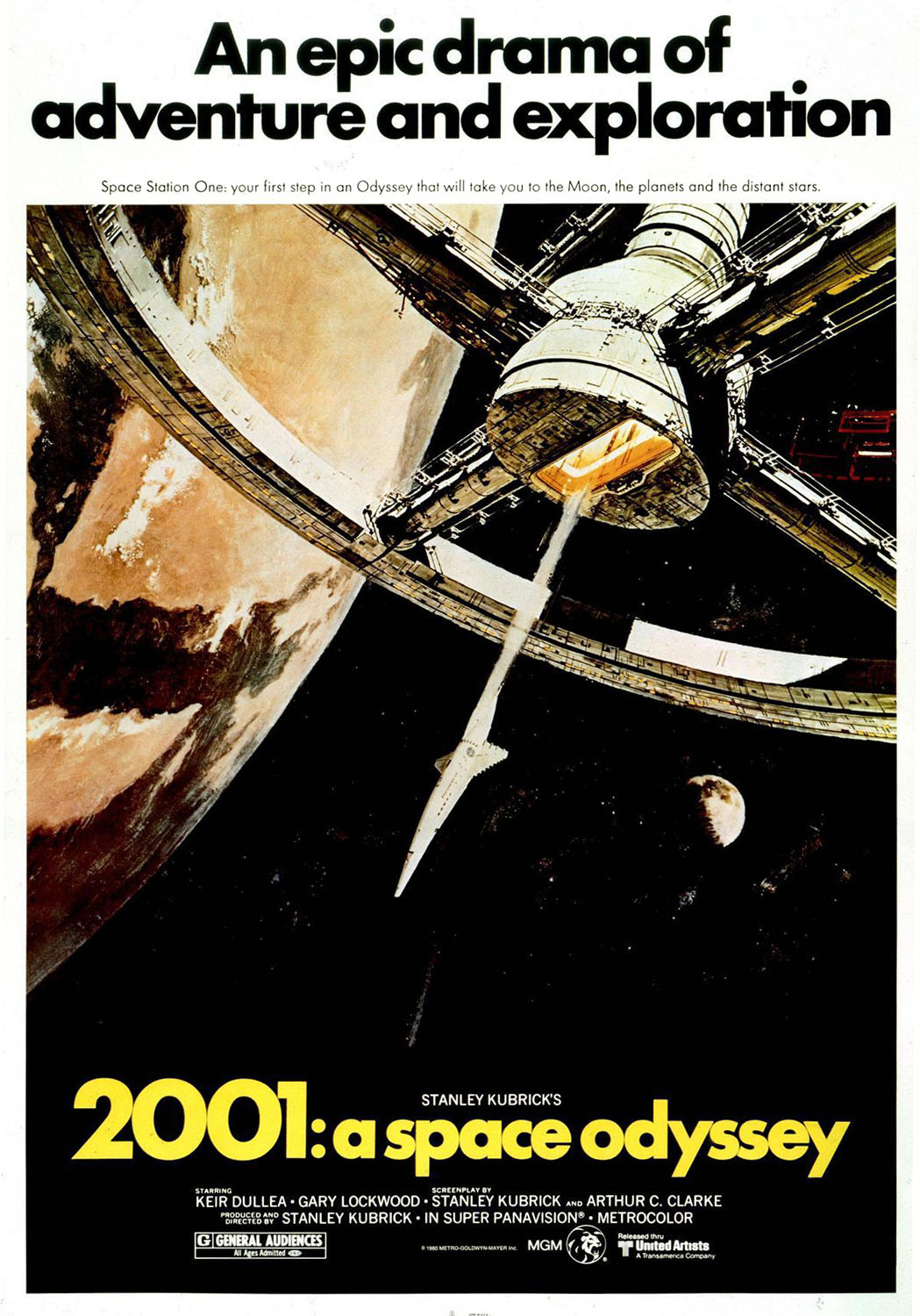
Stanley Kubrick’s '2001: A Space Odyssey’ (1968) is a visually stunning film, made in collaboration with science fiction author Arthur C. Clarke. It is also a very strange film, though it masquerades as science fiction, upon closer inspection is defies genre. Kubrick himself once described the film as a ‘mythological documentary’ (Walker, 1971:241).


Fig. 1 Poster
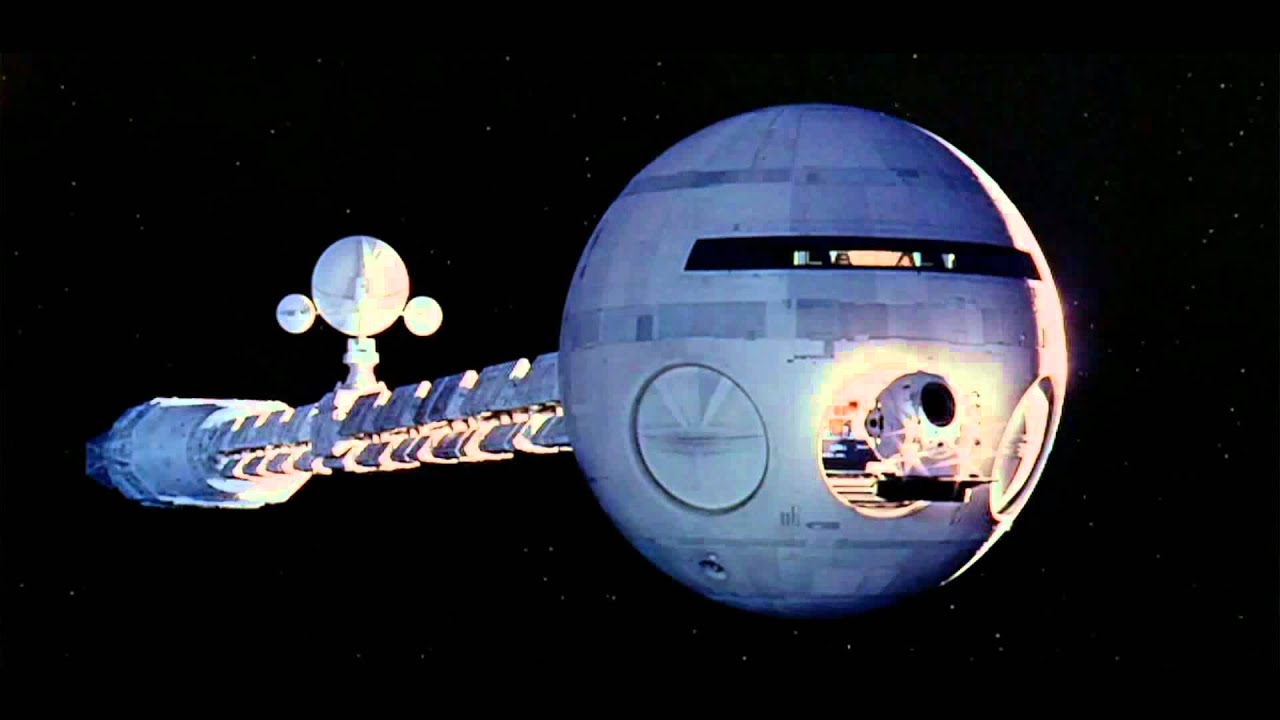
The film has very impressive special effects, Kubrick worked with Douglas Trumbull, among many others, to create sets that sometimes seem so simple, yet always beautiful, with a key focus on realism. The Variety review at the time said that 'There can be little doubt that the special effects created for “2001” are the equal of any the screen has come up with.’ (Frederick, 1968). The effects remain convincing even today and are truly remarkable for this reason.

Fig. 2 The Ship Travelling to Jupiter
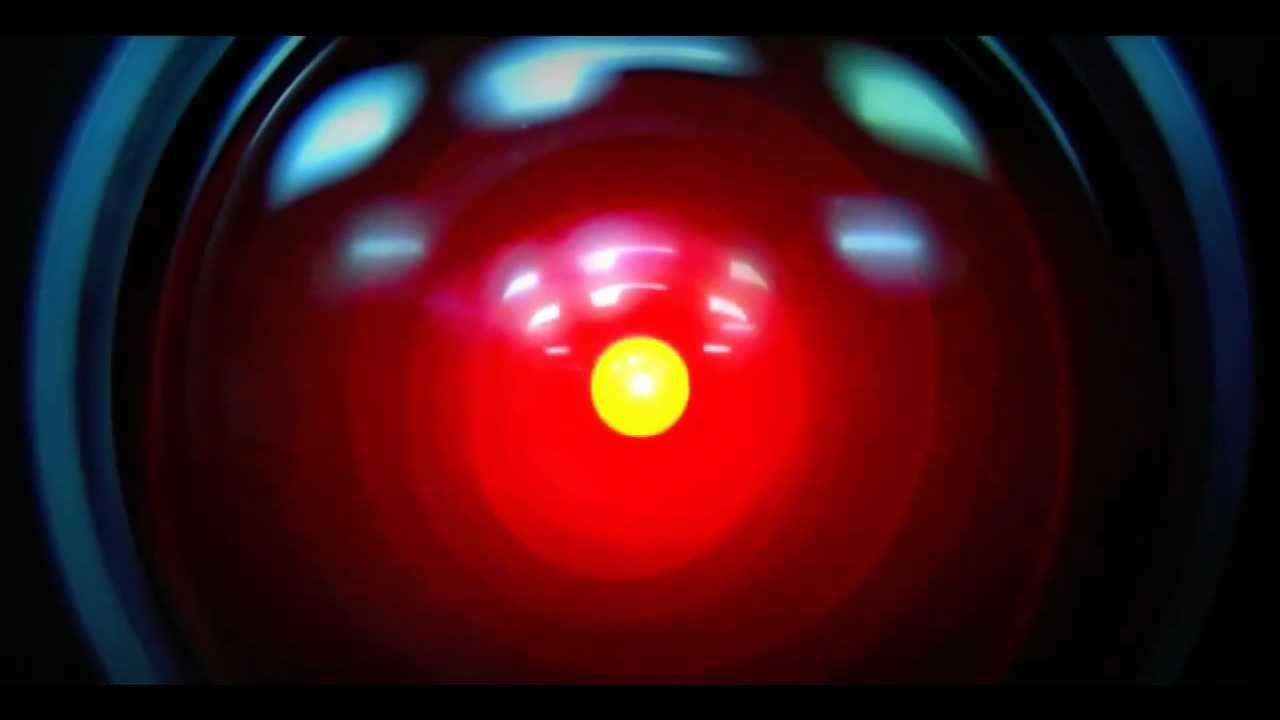
The importance of the visuals of the film far outweighs that of any plot or character in the film. The dialogue is minimal and functional and the few characters seem emotionless, they themselves functional to Kubrick’s vision. Roger Ebert writes that the film is 'meditative. It does not cater to us, but wants to inspire us, enlarge us.’ (Ebert, 1997) The most interesting character in the film is HAL 9000, the artificial intelligence tasked with running the ship in which the less interesting characters travel. HAL's death is perhaps the only moment in the film where the audience is expected to feel emotion for a member of the crew, that it is a computer they feel for might be unsettling.

Fig. 3 HAL 9000
Unnerving the audience seems to be a key point of the film, the camera remains at a distance for most of the film and any close up shot occurs at a moment of importance in the film. This works very well to disconnect the audience from what they are seeing on the screen. However, this may have been a key element for those who did not enjoy the film; Renata Alder of the New York Times wrote that the film is 'somewhere between hypnotic and immensely boring’ (Alder, 1968). The scene in which Frank watches a birthday message from his parents is emotionless and shown from a distance, it is very strange to watch, and it seems to drag on as nothing happens. Although nothing happens, the scene works well to build the strange mood of the film.

Fig. 4 An expressionless Frank watching a birthday message from his parents
During production Kubrick worked with noted film composer Alexander North, but after North put in a considerable amount of time and effort into producing music for the film, Kubrick scrapped everything and used pre-existing works instead. This was not done kindly, as North found this out at the screening of the finished film. The decision to use pre-existing music in the film confused many people in the industry and it caused concern among film composers as they worried is this would become a trend that could affect their livelihoods. (Patterson, 2004:445-446) The score was seen by some as ineffectual and strange, described by author Randall D. Larson as 'a somewhat arbitrary incorporation of music not intended for such a purpose’ (Larson, 1985:311). Others found Kubrick’s decision to employ pre-existing classical music to be very good. Ebert considered North’s score a 'good job of film composition’, but noted that it ‘would have been wrong for “2001”’ and that the music used in the film 'brings a seriousness and transcendence to the visuals.' (Ebert, 1997).

The placement of the music is very important, too. There are moments of silence, with no music, sometimes there is the functional dialogue to fill this space, sometimes only breathing and then sometimes, nothing at all. The gaps seem to convey the nature of the void of the universe and also work to build tension. The loud classical music is very atmospheric, the audience expects things to happen when it is there, they expect the pace to increase. At different points in the film, the music, or lack thereof, can be quite frightening, as the viewer struggles to predict what will happen next. This underlying tension brings a sense of mystery to the film, which goes well with the strange plot and the vast emptiness of the environment. There is a particularly effective scene in the first act of the film with a monolith, where intense music is used for dramatic effect. There are similar scenes throughout the film, with different pieces of classical music used to build suspense. Almar Haflidason, writing for the BBC, said that ‘It's triumph lies in its scope of cinematic splendour and the attempt to marry some of man's most beautiful music to the infinite mystery of space.’ (Haflidason, 2001).

Fig. 5 The Monolith
The film divides opinions, but it cannot be said that it has not made an impact. The film has been very influential and quotes and images from the film have been borrowed and parodied many times. The film continues to be a talking point today as film’s such as ‘Gravity’ (2013) and ‘Interstellar’ (2014) so clearly take their inspiration from it.

Bibliography

Alder, R. (1968). The Screen: '2001' Is Up, Up and Away: Kubrick's Odyssey in Space Begins Run. At:
http://www.nytimes.com/movie/review?res=9a04e6da1530ee3bbc4c53dfb2668383679ede (Accessed on 16.10.16)


Ebert, R. (1997). Great Movie 2001: A Space Odyssey. At:
http://www.rogerebert.com/reviews/great-movie-2001-a-space-odyssey-1968 (Accessed on 16.10.16)

Frederick, R. (1968). Review: '2001 A Space Odyssey'. At:
http://variety.com/1968/film/reviews/2001-a-space-odyssey-1200421723/ (Accessed on 16.10.16)

Haflidason, A (2001). 2001: A Space Odyssey (1968) At:
http://www.bbc.co.uk/films/2000/09/18/2001_review.shtml (Accessed on 16.10.16)

Larson, R. (1985). Musique Fantastique: A Survey of Film Music in the Fantastic Cinema. Metuchen, NJ: Scarecrow Press.

Patterson, D. (2004). 'Music, Structure and Metaphor in Stanley Kubrick's 2001: A Space Odyssey' In: American Music 22 (3) pp.445-446 [Online] At:
http://www.jstor.org/stable/pdf/3592986.pdf (Accessed on 16.10.16)

Walker, A. (1971). Stanley Kubrick Directs. New York: Harcourt Brace Jovanovich.


Illustration List

Fig. 1 Poster
Kubrick, S. (1968). '2001: A Space Odyssey' [Poster] At:
http://criterioncast.com/wp-content/uploads/2016/04/2001-Space-Odyssey_68.jpg (Accessed on 16.10.16)

Fig. 2 The Ship Travelling to Jupiter
Kubrick, S. (1968). '2001: A Space Odyssey' [Film Still] At:
https://i.ytimg.com/vi/7g27GTH-KaM/maxresdefault.jpg (Accessed on 16.10.16)

Fig. 3 HAL 9000
Kubrick, S. (1968). '2001: A Space Odyssey' [Film Still] At:
https://i.ytimg.com/vi/qDrDUmuUBTo/maxresdefault.jpg (Accessed on 16.10.16)

Fig. 4 An expressionless Frank watching a birthday message from his parents
Kubrick, S. (1968). '2001: A Space Odyssey' [Film Still] At: