Showing posts with label Alfred Hitchcock. Show all posts

3 March 2017

The Birds, 1963

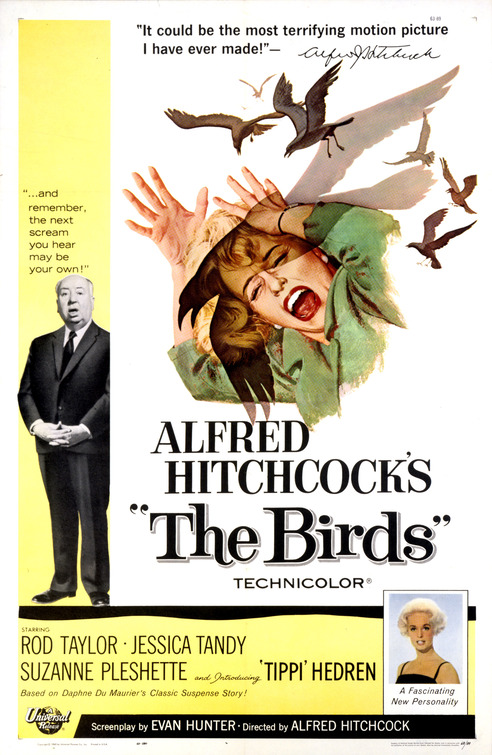
Fig. 1 Poster
Alfred Hitchcock’s ‘The Birds’ (1963) is described by Alistair Sooke of The Telegraph as a ‘peerless horror film’ (Sooke, 2015). Indeed, the film is impressively disturbing and would stick in the mind of the viewer for its mystery and its confidence. Xan Brooks of The Guardian suggests that this is one of Hitchcock’s most confident films, as his reputation was at its peak, he applauds the ‘daring, audacity and command of its material’ (Brooks, 2012). The film follows the story of Melanie Daniels’ visit to Bodega Bay, a small and tight-knit community. The town is then attacked by birds with increasing ferocity, Melanie seems central to these attacks, but no reason is given for their occurrence.

Fig. 2 Local suspicion
One of the film’s defining characteristics is its mystery; the viewer waits and waits for an explanation, but none is given. Brooks writes; ‘Everyone is confused, ruffled, on the brink of flight. Here is a film that provides no answers and no escape. Chaos reigns from top to tail.’ (Brooks, 2012). The locals are suspicious of Melanie from the moment she arrives, Fig. 2 shows some of their reactions to her appearance. The attacks coincide with her arrival and their bizarre nature amplifies the pre-existing distrust. By the time the attacks are in full swing, the locals are downright terrified of her. Fig. 3 shows a scene where a collection of women gather and glare at her as one mother accuses her of being evil. The audience is left to wonder if the attacks really are Melanie’s fault, or if perhaps they are a manifestation of the local’s distrust of outsiders.

Fig. 3 Local fear
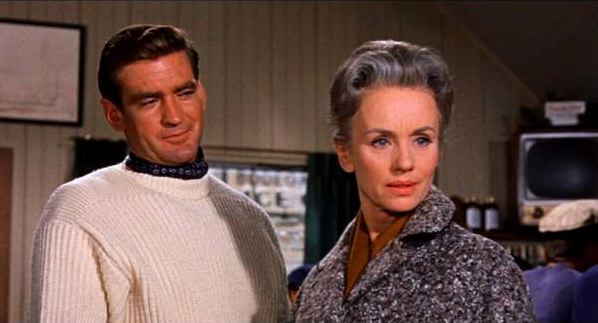
Sooke notes the way that ‘Hitchcock makes the malevolent birds seem like manifestations of his characters' mental unease –especially that of Mitch's mother and his former lover, Annie, now a local schoolteacher.’ (Sooke, 2015). Annie is eventually killed by the birds and Mitch’s mother is also assaulted in her home and witnesses very gory scenes at a neighbour’s house. Conflict between women is a key theme in the film, with Melanie at odds with these characters; Fig. 4 shows Mitch’s mother staring Melanie down. Birds are commonly associated with women and harpies and furies come to mind when considering the vicious attacks in the film. Perhaps the birds are a manifestation of jealousy and territorial rage. Bosley Crowther of The New York Times wrote at the time of release that ‘the context of the birds concentrating their fury upon a house in which a possessive and jealous mother hovers anxiously over her son is so obvious and fascinating that I rather lean to it.’ (Crowther, 1963).

Fig. 4 Mitch's mother
The overwhelming use of diegetic sound in the film is crucial to its effect. The score is made up of bird calls and rustling feathers and Sooke writes that ‘the absence of a score renders the horror more immediate’ (Sooke, 2015). The saturation of these noises towards the end of the film is terrifying and provides the viewer with a sense of doom. Using sound in this way is a clever move by Bernard Herrmann, a longtime colleague of Hitchcock’s. No reason is given for the events in the film so there is little reason to expect that they will end. It feels as though the noise and the danger could keep on building until all sense is drowned out.

Bibliography

Brooks, X (2012). My Favourite Hitchcock: The Birds. At: https://www.theguardian.com/film/filmblog/2012/jul/31/my-favourite-hitchcock-the-birds (Accessed on 03.03.17)

Crowther, B (1963). Screen: 'The Birds': Hitchcock's Feathered Fiends Are Chilling. At: http://www.nytimes.com/movie/review?res=9D05E7D9143CEF3BBC4953DFB2668388679EDE (Accessed on 03.03.17)

Sooke, A (2015). The Birds, review: 'disturbing'. At: http://www.telegraph.co.uk/culture/film/filmreviews/11334674/The-Birds-review-disturbing.html (Accessed on 03.03.17)

Illustration List

Fig. 1 Poster
Hithcock, A (1963). The Birds [Poster] At: http://www.impawards.com/1963/posters/birds.jpg (Accessed on 03.03.17)

Fig. 2 Local suspicion
Hithcock, A (1963). The Birds [Film Still] At: http://1125996089.rsc.cdn77.org/wp-content/uploads/2015/07/birds18.jpg (Accessed on 03.03.17)

Fig. 3 Local fear
Hithcock, A (1963). The Birds [Film Still] At: https://flickswithmaddog.files.wordpress.com/2011/12/birds-3.jpg (Accessed on 03.03.17)

Fig. 4 Mitch's mother
Hithcock, A (1963). The Birds [Film Still] At: http://www.mardecortesbaja.com/ManMotherBirdsBaja.jpg (Accessed on 03.03.17)

Psycho, 1960

Fig. 1 Poster
Alfred Hitchcock’s ‘Psycho’ (1960) is an incredibly influential horror film. Hitchcock was a well established director and, with cameos in his films and a television series hosted by him, very famous not just among those in the film industry. Even so, Paramount was concerned about the violent and provocative content of the film and were reluctant to take it on. A deal was struck and Hitchcock ended up owning 60 per cent of the film and working with a very low budget, Paramount decided that this was enough to save them from any embarrassment or loss, should the film flop (Thomson, 2009). It did not; ‘Psycho’ went on to be one of the most famous and influential films of all time. The film was genre defining and many have since tried to imitate it, spawning a slew of slasher films such as ‘Halloween’ (1978).

Fig. 2 House
Fig. 3 Birds
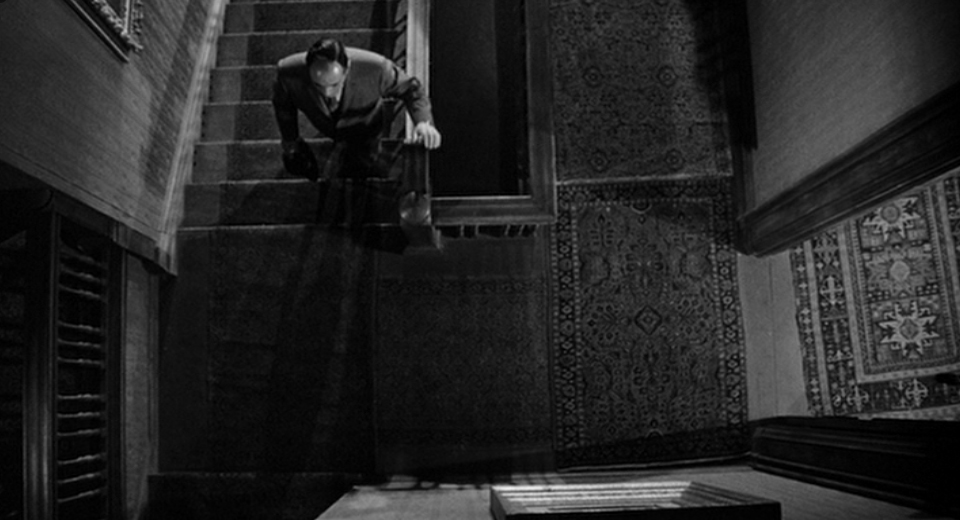
Fig. 4 View from above
One of the ways Hitchcock creates tension and unease in the film is the recurrent theme of something looking down. There is a house on a hill behind the motel that is the central location of the film, shown in Fig. 2, and this positioning makes it seem mysterious and threatening. The thought of Norman Bates’ cantankerous old mother watching from the window is disturbing. The stuffed bird’s Norman surrounds himself with, shown in Fig. 3, further the sense of being watched from above. The common association of birds with women helps to create an uncomfortable atmosphere as Norman speaks about his close relationship with his mother. The house is presented as the mother’s domain and Hitchcock uses the camera very cleverly to disturb the viewer. As a detective reaches the top of the stairs in the house the camera suddenly shifts to look almost directly down, as shown in Fig. 4. Mark Monahan, writing for The Telegraph comments on how disorientating this is, writing that ‘before we've had even a second to get our bearings, a figure darts into view from the right of the screen, knife raised’ (Monahan, 2015). The sudden change creates the perfect atmosphere for Hitchcock to shock the viewer when the mother rushes out at the detective.

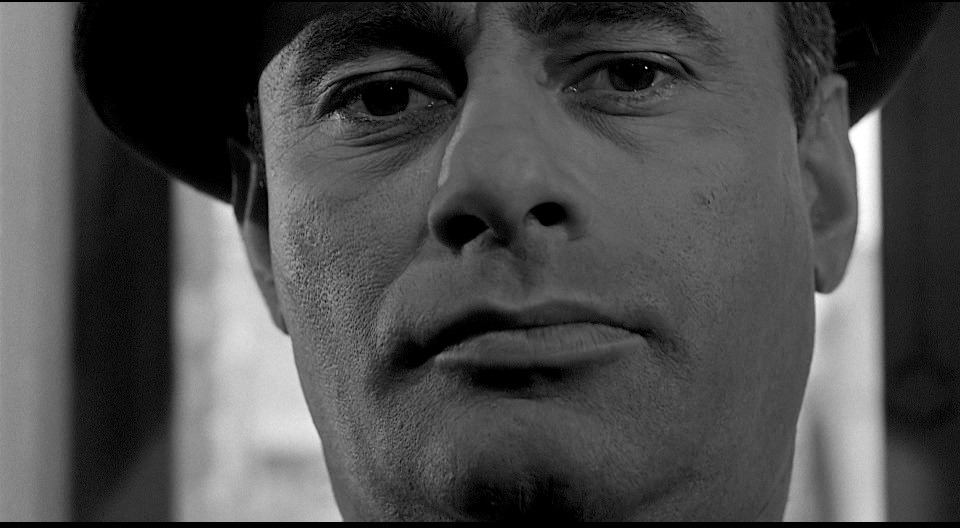
Fig. 5 Detective
Fig. 6 Policeman
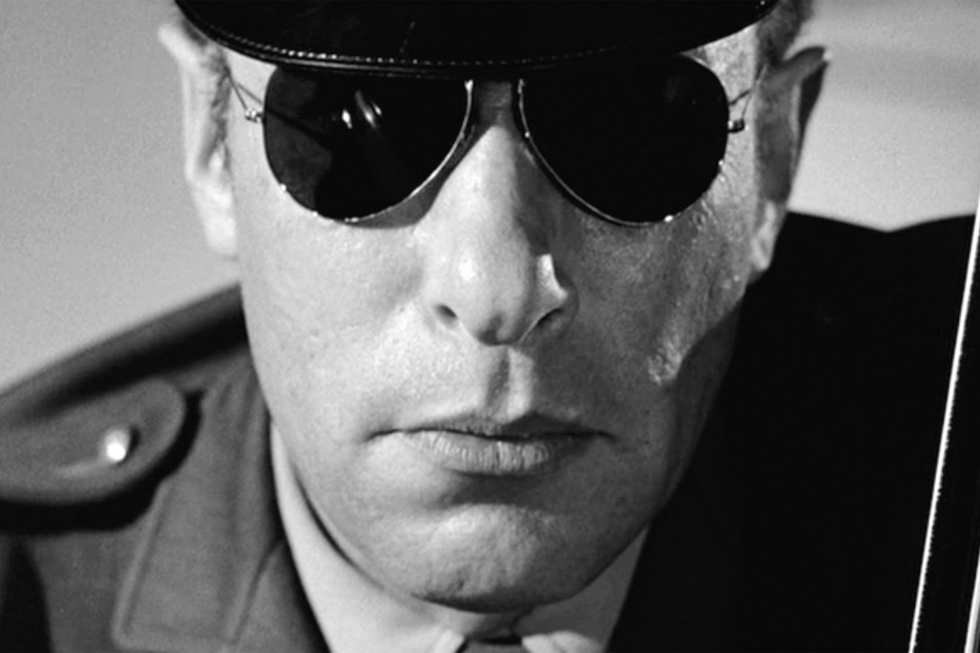
Other clever uses of camera include close-ups on the faces of powerful male figures, the detective and a policeman, Fig. 5 and Fig. 6 show these close-ups. The close-ups allow for their faces to take up most of the screen, giving them a strong presence and, in the case of the policeman, a threatening demeanor. Hitchcock also uses the camera in the first part of the film to distract the viewers from the true direction of the film. By closing in on the stolen money, shown in Fig. 7, so often Hitchcock leads the viewer to believe that this is an important plot element. In fact, this is all a clever trick, making the shock of Marion’s murder all the more powerful.

Fig. 7 Money
The murder of this character so early in the film is a shock to any viewer, but the original 1960 audience would have been impacted more than modern audiences. As Monahan comments this created an ‘unprecedented sense of careering into uncharted and terrifying territory: what the hell would happen next?’ (Monahan, 2015). The shock of Marion’s death leaves the viewer unsettled and therefore easily startled and disturbed for the rest of the film. The tension built in the first part of the film now slips further towards terror as conventions are not being followed and anything could happen.

Fig. 8 Marion's journey
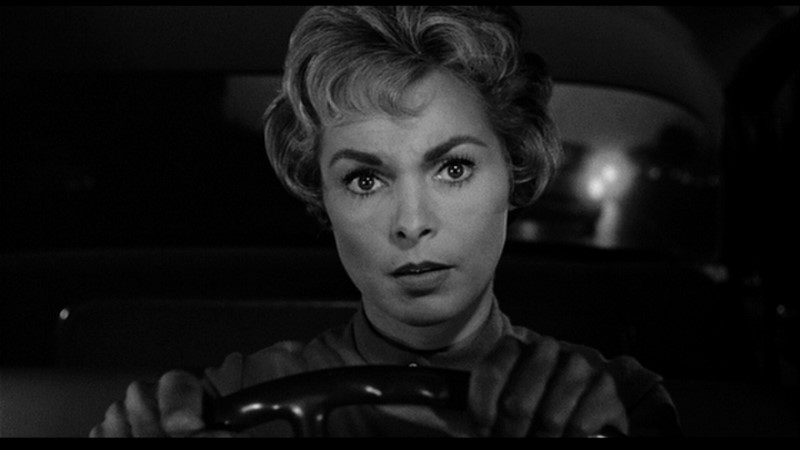
Bernard Herrmann’s score is essential to the power the film holds. Stephen Deutsch, writing for The Soundtrack, explores the relationship between music and thoughts and feelings. He comments on Hitchcock’s use of sound to invite the viewer to identify with Marion’s worry, asking them to focus on her fear surrounding her crime. The voices that are played over Marion’s journey (Fig. 8) and the music that is used to reflect her emotions plants a belief that this will be a key focus of the film. This distracts the viewer from any threat posed by Norman or his mother, allowing for a greater shock when Marion is attacked (Deutsch, 2010:56-57). He goes on to summarise; ‘The music embodies what she is feeling, and we feel it with her. Her worry is now ours. Her journey is also ours, and her death will be an unbelievable shock.’ (Deutsch, 2010:59).

The most memorable part of the score, and one of the most memorable moments in film history, is the shrieking violin played over Marion’s murder. Deutsch described Hitchcock’s use of sound ‘not to approximate a notion of naturalism, but to heighten the emotional impact of his films on his audience.’ (Deutsch, 2010:55). The piercing sound attacks the viewer’s senses, giving an increased horror factor to the scene. Hitchcock used an incredible amount of shots in this scene, building a powerful and aggressive montage. Depicting such a gruesome death was unusual at the time and this would have increased the shock of the scene. The montage works well with the piercing music and the shock of the quick cuts complements the shock of the murder.

The film is described by Richard Brody of The New Yorker as ‘demanding and disturbing’ (Brody, 2012). Hitchcock’s clever use of the tools at his disposal more than makes up for the low budget, and the film rightfully earns its place as one of the most memorable films of all time.

Bibliography

Brody, R (2012). The Greatness of "Psycho". At: http://www.newyorker.com/culture/richard-brody/the-greatness-of-psycho

Deutsch, S (2010). "Psycho and the Orchestration of Anxiety." The Soundtrack 3 (1) pp 53-66. Online At: http://www.ingentaconnect.com/content/intellect/ts/2010/00000003/00000001/art00007 (Accessed on: 03.03.17)

Monahan, M (2015). Pyscho, review. At: http://www.telegraph.co.uk/culture/film/filmreviews/11025424/Psycho-review.html (Accessed on: 03.03.17)

Thomson, D (2009). The Moment of Psycho: How Alfred Hitchcock Taught America to Love Murder. New York: Basic Books. Online At : https://books.google.co.uk/books?hl=en&lr=&id=buYWBQAAQBAJ&oi=fnd&pg=PA1&dq=psycho+hitchcock&ots=WW3QKiAos7&sig=LFRb3aQ3j8-S0WuK7wHTcDUZ2bo#v=onepage&q&f=false (Accessed on: 03.03.17)

Illustration List

Fig. 1 Poster
Hitchcock, A (1960). Psycho [Poster] At: https://upload.wikimedia.org/wikipedia/en/archive/b/b9/20161225164431!Psycho_(1960).jpg (Accessed on: 03.03.17)


Fig. 2 House
Hitchcock, A (1960). Psycho [Film Still] At: https://news.usc.edu/files/2015/09/univ_psycho_frameWEB-824x549.jpg (Accessed on: 03.03.17)

Fig. 3 Birds
Hitchcock, A (1960). Psycho [Film Still] At: http://www.fact.co.uk/media/57116346/psycho-3.jpg (Accessed on: 03.03.17)


Fig. 4 View from above

Fig. 5 Detective
Hitchcock, A (1960). Psycho [Film Still] At: http://www.hollywood-elsewhere.com/images/column/augusto/balsam.jpg (Accessed on: 03.03.17)

Fig. 6 Policeman
Hitchcock, A (1960). Psycho [Film Still] At: http://www.thedoublenegative.co.uk/blog/wp-content/uploads/2015/03/Psycho-slider.jpg (Accessed on: 03.03.17)

Fig. 7 Money
Hitchcock, A (1960). Psycho [Film Still] At: http://i1.wp.com/www.horrorhomeroom.com/wp-content/uploads/2015/04/3364_4.jpg (Accessed on: 03.03.17)

Fig. 8 Marion's Journey
Hitchcock, A (1960). Psycho [Film Still] At: http://despinakakoudaki.org/wp-content/uploads/2014/05/Psycho.jpg (Accessed on: 03.03.17)